
Marty Supreme
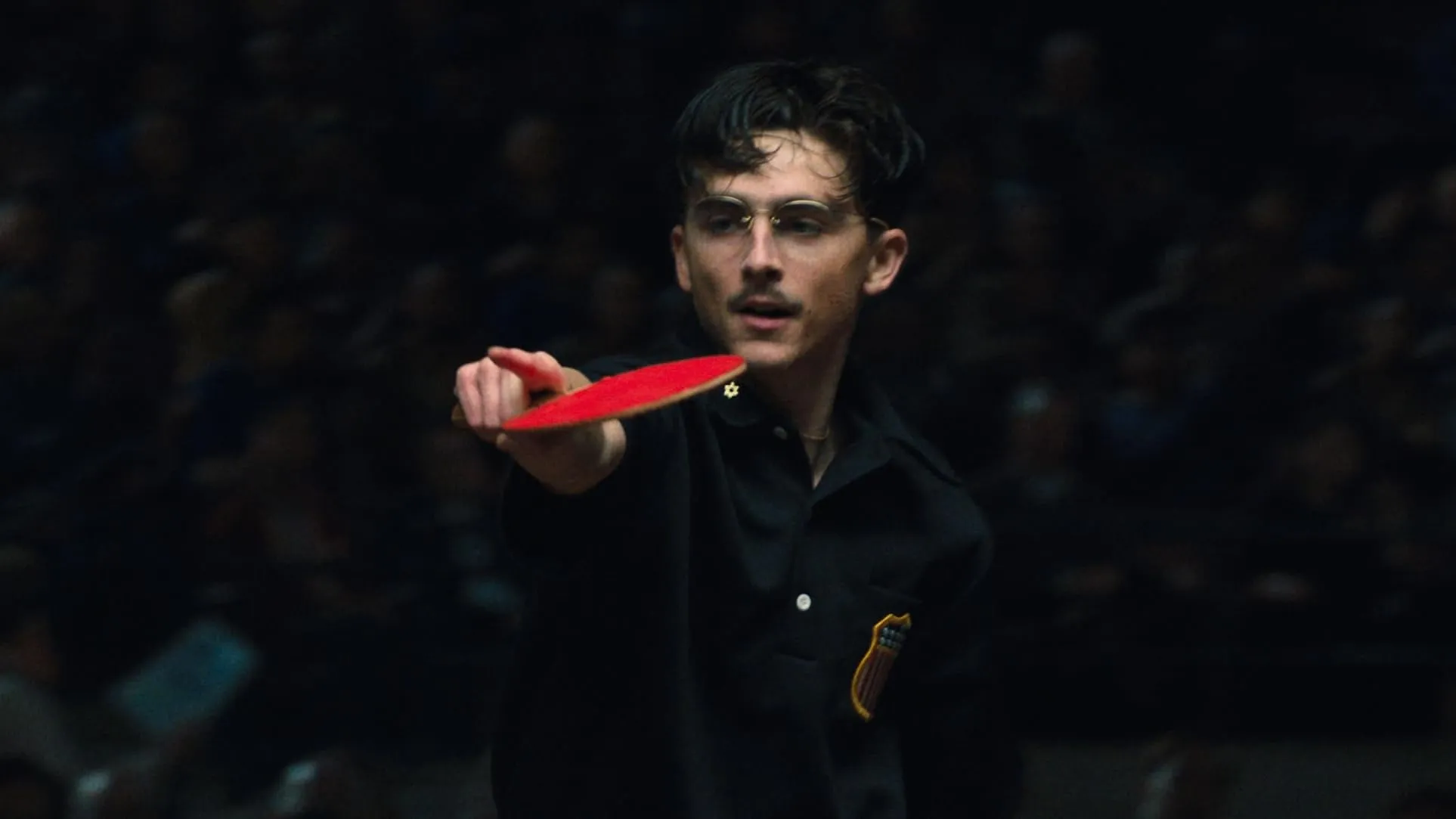
Marty Mauser epitomises the aphorism “fake it until you make it.” Whether he ultimately makes it, however, is far less straightforward. Marty Supreme follows the aggressively ambitious young New Yorker Marty Mauser, played by Timothée Chalamet, whose singular obsession is to become the greatest ping-pong player in the world. Marty is propelled by grandiose self-belief and an almost pathological refusal to accept rejection. He is, at once, transparently sleazy and undeniably charismatic—a hustler whose audacity frequently creates the very obstacles he must then overcome.
Though proficient as a shoe salesman—and even on track for managerial promotion—Marty considers such stability intolerably puny. Convinced of his destined greatness, he “borrows” $700 from the store and boards a flight to London, determined to win the World Championship and recast himself as the embodiment of the American hero.
Josh Safdie bundles the film into a frantic yet controlled rhythm. The pacing mirrors Marty’s restless psyche without becoming exhausting. Safdie crafts a visually kinetic narrative that foregrounds an intentionally unsympathetic protagonist while immersing the viewer in his relentless pursuit of glory. Cinematographer Darius Khondji, reuniting with Josh Safdie after Uncut Gems, shot Marty Supreme primarily on 35mm film, supplementing it with select digital footage. Working with Arriflex cameras and vintage Panavision C- and B-series anamorphic lenses, Khondji crafts a textured, grain-rich image that evokes the visual language of the 1950s, reinforcing the film’s period atmosphere and lending its kinetic energy a tactile, almost nostalgic depth. Like Uncut Gems, the film sustains tension through moral discomfort; however, unlike Howard Ratner’s downward spiral, Marty consistently lands on his feet. His confidence borders on delusion, yet it proves functionally effective. Failure never quite sticks to him.
Thematically, Marty Supreme interrogates the mythology of postwar American ambition—the cult of confidence, the glorification of hustle, and the thin ethical line between entrepreneurship and exploitation. The film suggests that excessive self-belief is both corrosive and culturally rewarded, a paradox that remains strikingly contemporary.
Chalamet delivers one of his most controlled yet flamboyant performances to date, which renders him a favourite for the Best Actor award in the upcoming Oscars. He captures Marty’s performative bravado without flattening him into caricature. Supporting performances elevate the material further. Gwyneth Paltrow makes a compelling return to the screen as Kay Stone, a fallen film star, adding a subtle meta-textual layer to the narrative, while Odessa A’zion brings emotional gravity as Rachel, Marty’s childhood friend and romantic anchor. Equally worth mentioning are the performances by Kevin O’Leary in his acting debut as Milton Rockwell, a wealthy pen magnate and husband of Kay Stone, who invites Marty to take part in a high-profile exhibition ping-pong match and Tyler Okonma (aka Tyler, the Creator) playing Marty’s best friend, Wally.